

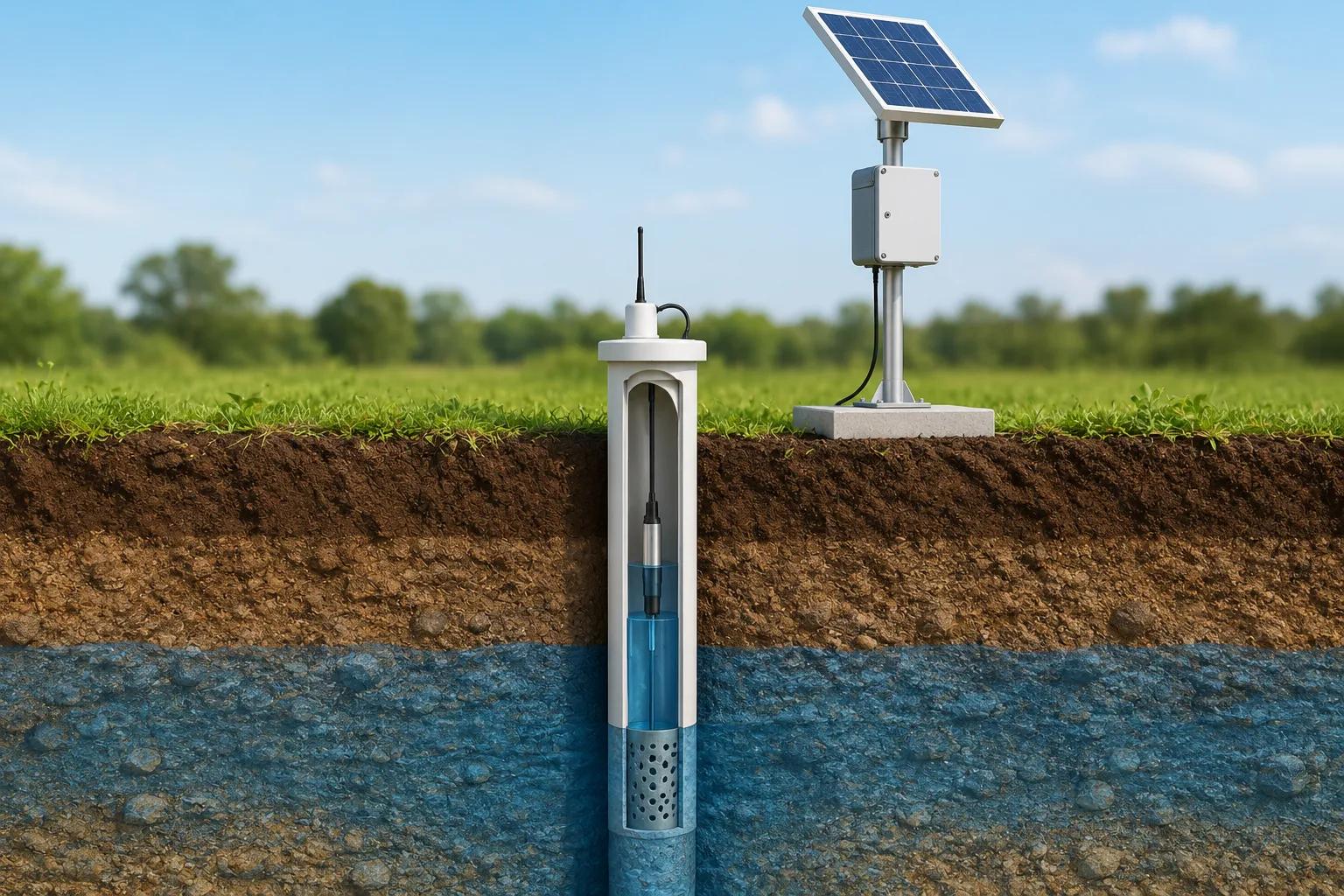
Accurate groundwater data is the backbone of every successful infrastructure, mining, or environmental project. Yet many project teams rely on outdated or imprecise methods to monitor water levels — leading to costly design errors, compliance failures, and unforeseen ground movement. Understanding how piezometer works is essential for engineers, hydrogeologists, and project developers who need reliable groundwater level monitoring data.
A piezometer is a precision instrument designed to measure water pressure and piezometric levels within soil formations or rock aquifers. It provides the foundational data needed for hydrogeological investigation, dam safety monitoring, excavation stability analysis, and groundwater compliance assessment.
At Bhoojal Survey, we provide professional piezometer installation and groundwater monitoring services across India — delivering scientifically accurate data that drives informed project decisions.
What is a Piezometer?
A piezometer is a specialised groundwater monitoring instrument used to measure pore water pressure or hydraulic head at a specific point within a soil or rock formation. The term comes from the Greek word piezein, meaning to press — reflecting its core function of measuring water pressure within subsurface environments.
In a groundwater monitoring system, piezometers are installed in boreholes or observation wells at defined depths to capture continuous or periodic readings of the water table and pressure conditions. These readings support hydrogeological modelling, slope stability analysis, embankment design, and CGWA compliance assessments.
The primary components of a piezometer system include:
- Piezometer tip or filter zone — the intake point for groundwater pressure
- Standpipe or sensor housing — the measurement tube installed in the borehole
- Pressure transducer or gauge — converts water pressure to readable data
- Data logger or readout unit — records and transmits measurement data
- Protective casing and surface termination — ensures installation integrity
How Piezometer Works
The piezometer working principle is based on measuring the pressure exerted by groundwater at a specific depth below the surface. When a piezometer is installed in a borehole, the porous filter tip allows groundwater to enter the instrument and equilibrate with the surrounding water pressure.
The pressure measurement process follows a straightforward mechanism. Groundwater pressure acts on the sensing element — either a water column in a standpipe or an electronic pressure transducer — and generates a measurable reading. This reading is then converted to groundwater level or piezometric head using standard hydrogeological formulas.
Step 1 — Installation:
The piezometer is installed at a predetermined depth in a drilled borehole, with the filter tip positioned in the target aquifer or monitoring zone.
Step 2 — Pressure Equilibration:
Groundwater enters the filter tip, allowing pressure inside the piezometer to equalise with the surrounding formation water pressure.
Step 3 — Measurement:
The pressure reading is captured — either as a water column height in standpipe systems or as an electrical signal in vibrating wire and digital piezometers.
Step 4 — Data Recording:
Readings are logged manually or automatically via a data logger connected to the pressure transducer.
Step 5 — Interpretation:
Recorded data is processed to determine groundwater level, pore water pressure trends, and hydrogeological behaviour over time.
Types of Piezometer Systems
Selecting the correct piezometer type depends on the project requirements, monitoring depth, soil conditions, and data accuracy needs. Bhoojal Survey deploys a range of advanced piezometer monitoring technologies suited to diverse field conditions across India.
- Standpipe Piezometer: The simplest and most widely used type. A perforated plastic tube sealed at depth allows groundwater to rise inside it. The water level is measured manually using a water level meter. Reliable, cost-effective, and suitable for long-term groundwater observation wells.
- Vibrating Wire Piezometer: A precision electronic instrument where a tensioned wire vibrates at a frequency proportional to the applied water pressure. Highly accurate, suitable for remote monitoring, and commonly used in dam safety and deep infrastructure projects.
- Pneumatic Piezometer: Uses compressed gas to measure pore water pressure. Suitable for installations where electrical sensors are not appropriate, such as in high-vibration environments.
- Digital Groundwater Monitoring Systems: Modern automatic water level monitoring instruments equipped with data loggers, telemetry, and real-time data transmission. Ideal for continuous hydrogeological monitoring systems in industrial and mining projects.
Bhoojal Survey conducts hydrogeological survey using SSRMPATS Instrument, GER DETECT, and PQWT at site for open well / borewell location — delivering advanced groundwater and hydrogeological monitoring solutions with scientific groundwater observation and pressure analysis.
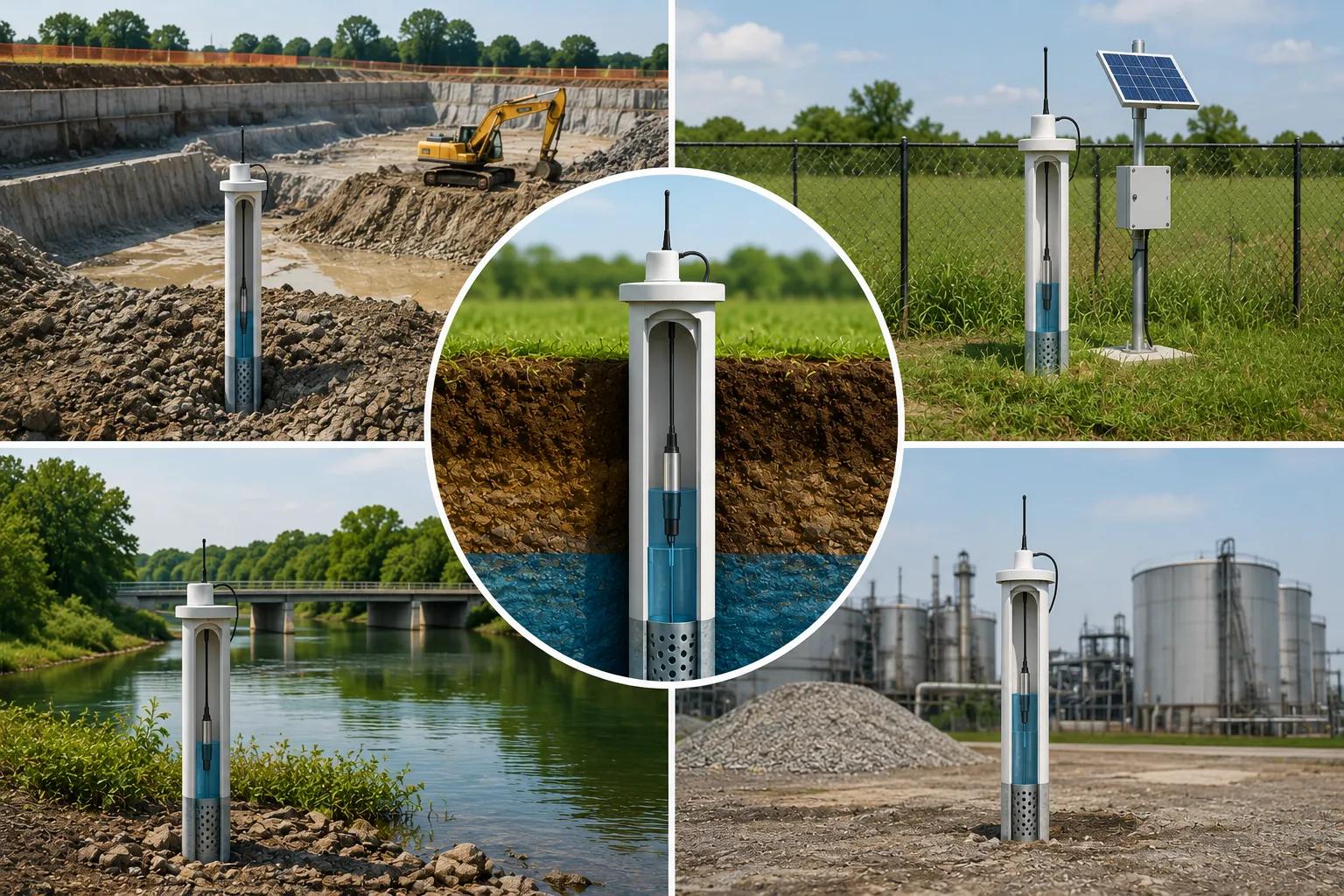
Applications of Piezometer Monitoring Systems
Piezometer monitoring systems are critical across a wide range of engineering, environmental, and hydrogeological projects. Bhoojal Survey has deployed piezometer installation and monitoring solutions for the following applications:
- Groundwater Observation Wells: Long-term piezometric level monitoring for water resource management and CGWA compliance.
- Mining and Excavation Projects: Pore water pressure monitoring ensures slope stability and safe dewatering during deep excavations and open-cast mining operations.
- Dam and Embankment Monitoring: Vibrating wire piezometers track internal water pressure in earth dams, embankments, and levees, providing early warning of seepage or failure risks.
- Infrastructure and Tunnel Projects: Groundwater pressure data guides tunnel design, instrumented excavation support, and settlement monitoring.
- Irrigation and Agriculture Projects: Piezometers monitor water table fluctuations in irrigated zones, supporting sustainable groundwater use in agriculture.
- Environmental Compliance Monitoring: Continuous digital piezometer monitoring supports regulatory reporting for environmental groundwater compliance projects and contamination assessment studies.
Why Choose Bhoojal Survey for Piezometer Monitoring Services
Bhoojal Survey is a trusted professional groundwater monitoring company providing piezometer installation consultancy, data analysis, and hydrogeological monitoring solutions across India. Our team brings together experienced hydrogeologists, field monitoring specialists, and environmental compliance experts.
- Experienced Monitoring Experts: Our hydrogeologists have hands-on experience in piezometer installation, calibration, and monitoring for industrial, mining, and infrastructure projects.
- Advanced Monitoring Technologies: We deploy digital piezometer monitoring solutions and vibrating wire systems providing high-precision groundwater observation data.
- Accurate Groundwater Level Analysis: Every piezometer reading is processed and validated by our technical team, ensuring reliable hydrogeological monitoring consultancy outputs.
- Fast Technical Reporting: Project-specific reports are delivered promptly, supporting your compliance, design, and decision-making timelines.
- Pan-India Groundwater Monitoring Services: Our groundwater level monitoring services in India cover projects from the Himalayan foothills to peninsular aquifer systems.
- Customised Monitoring Solutions: We design site-specific piezometer survey services in India tailored to your project's geology, depth requirements, and monitoring objectives.
Conclusion
Understanding how piezometer works is fundamental for any project that depends on accurate groundwater data. From mining dewatering to dam safety, from environmental compliance to infrastructure design — piezometer monitoring systems provide the subsurface intelligence that keeps projects safe, compliant, and on schedule.
Inaccurate or absent groundwater monitoring data leads to design failures, regulatory non-compliance, and unexpected ground movement. Investing in professional piezometer installation and groundwater monitoring services is not just good engineering practice — it is essential project risk management.
Contact Bhoojal Survey for professional piezometer installation and groundwater monitoring services across India.
Frequently Asked Questions (FAQ)
1. How does a piezometer work in groundwater monitoring?
A piezometer works by measuring the water pressure at a specific depth below the ground surface. The instrument is installed in a borehole, where its filter tip allows groundwater to enter and equilibrate with the surrounding formation pressure. This pressure reading is then converted into groundwater level or piezometric head data using hydrogeological calculations.
2. What is a piezometer used for?
A piezometer is used to monitor groundwater levels, measure pore water pressure in soils and rock formations, assess aquifer conditions, and support project safety in dams, embankments, tunnels, mines, and infrastructure works. It is also used for environmental groundwater compliance monitoring and CGWA regulatory reporting.
3. What are the main types of piezometers?
The main types include standpipe piezometers (simple manual water level measurement), vibrating wire piezometers (electronic precision monitoring), pneumatic piezometers (gas-pressure based), and digital automatic water level monitoring instruments with data loggers. The choice depends on project depth, accuracy requirements, and monitoring duration.
4. Why is groundwater monitoring important for industrial projects?
Industrial projects that extract or interact with groundwater must monitor water levels for regulatory compliance, site safety, and environmental management. Continuous pore water pressure monitoring prevents slope failures, subsidence, and unexpected water inflows. It also supports CGWA NOC compliance and environmental clearance requirements.
5. How deep can a piezometer be installed?
Piezometers can be installed at depths ranging from a few metres to several hundred metres, depending on the instrument type and borehole construction. Vibrating wire piezometers and digital monitoring systems are commonly used for deep installations in mining